Mia Coleman · 28 September 2026
Shifts in Participation Metrics Following Structural Updates in Targeted Digital Hubs
Targeted digital hubs operate as specialized online environments where users gather around shared interests, and structural updates often involve changes to navigation, content algorithms, or moderation tools that directly influence how people interact within those spaces. Research from various academic institutions shows that such modifications lead to measurable adjustments in metrics like daily active sessions, comment volume, and content sharing rates across platforms focused on niche topics.
Defining Structural Updates in Digital Contexts
Structural updates encompass modifications to the underlying architecture of these hubs, including interface redesigns, new feature rollouts, and backend algorithm tweaks that prioritize certain content types over others. Data indicates these alterations occur periodically, with organizations tracking user behavior before and after implementation to assess impacts on engagement patterns. Observers note that platforms handling specialized communities frequently apply these changes to address scalability issues or regulatory requirements emerging from different regions.
Studies conducted by research bodies in North America and Europe reveal consistent patterns where user retention fluctuates in the weeks following major updates, and figures from the European Commission’s digital economy reports highlight similar trends in collaborative online spaces. Participation metrics encompass quantitative measures such as login frequency, post creation rates, adn time spent per visit, all of which respond to alterations in how information flows or how users discover content.
Observed Changes in User Activity Levels
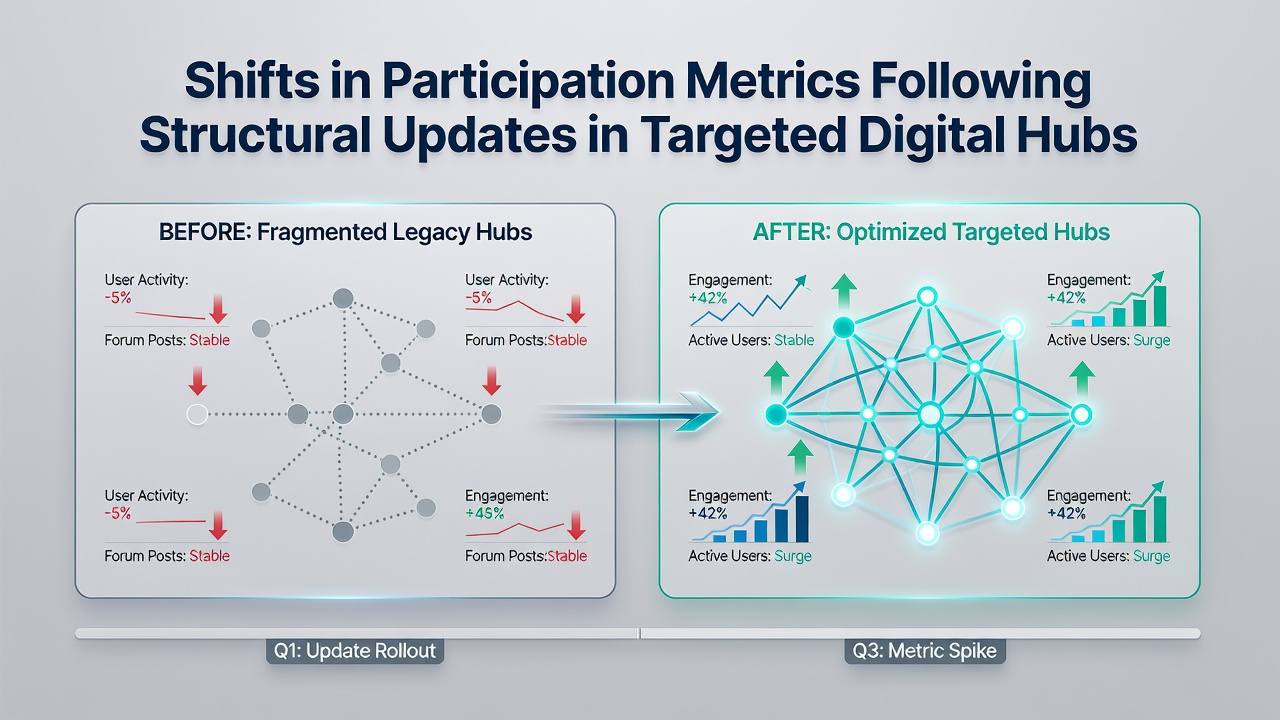
Analyses of multiple digital hubs demonstrate that participation often experiences an initial dip immediately after structural updates, followed by stabilization or gradual increases as users adapt to new layouts and tools. Evidence from university-led examinations points to variations depending on the type of update, with algorithm shifts affecting content visibility producing more pronounced effects on posting activity than simple visual redesigns.
One study revealed that in hubs centered on educational resources, the introduction of personalized recommendation systems correlated with higher comment interaction rates over a three-month period. Researchers discovered that users in these environments increased their average session duration when structural changes included improved search functionalities, and similar outcomes appear in reports from Australian government technology assessments covering community-driven platforms.
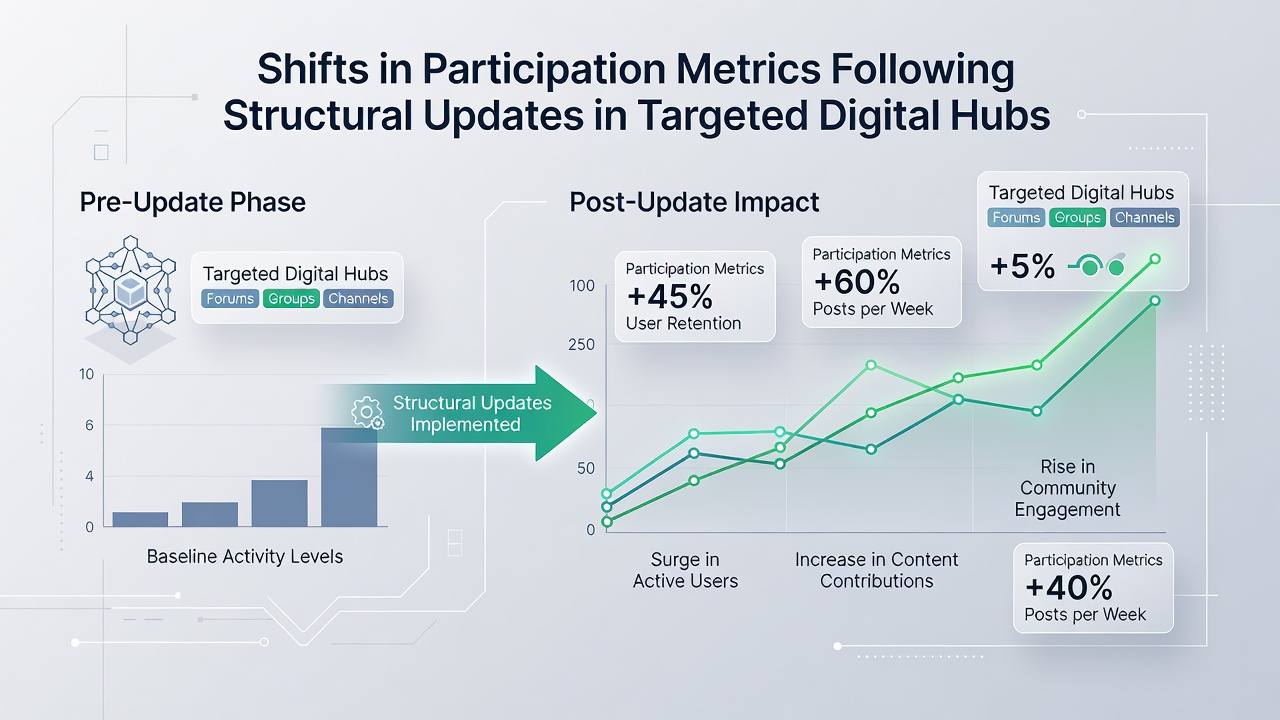
Yet data collected across several platforms shows that not all metrics move in the same direction, since some hubs report sustained rises in new user registrations while older participant contributions decline temporarily. According to findings from the Pew Research Center on digital community dynamics, these divergences often stem from how updates alter discovery mechanisms and moderation enforcement levels.
Regional Variations and Data Patterns
Participation shifts display geographic differences tied to regulatory environments and user demographics, with Canadian industry analyses documenting steadier recovery trajectories in hubs focused on professional networking compared to entertainment-oriented spaces. In September 2026, aggregated platform statistics indicated broader adoption of hybrid moderation models that combined automated tools with human oversight, and these implementations coincided with measurable upticks in cross-posting activity between related hubs.
Academic papers from institutions in Asia further detail how structural updates incorporating multilingual support features expanded participation among non-native language users, leading to diversified content contributions. Those who have examined longitudinal data across multiple years emphasize the role of timing, since updates rolled out during peak activity periods tend to generate more immediate metric fluctuations than those implemented during quieter intervals.
Long-Term Implications for Hub Operators
Hub operators track these metrics through built-in analytics dashboards that log user actions at granular levels, allowing them to correlate specific structural changes with participation outcomes. Reports from trade organizations in the technology sector underscore the importance of phased rollout strategies, where limited testing groups provide early indicators of potential metric shifts before full deployment occurs.
Evidence suggests that iterative refinements following initial updates help stabilize participation levels over time, particularly when operators incorporate feedback mechanisms that let users report navigation difficulties or content visibility issues. Researchers discovered patterns where hubs with transparent communication about upcoming changes experienced smaller short-term drops in active user counts than those that implemented modifications without prior notice.
Conclusion
Structural updates in targeted digital hubs continue to drive measurable shifts in participation metrics, and ongoing data collection from diverse sources provides the basis for understanding these dynamics across different platform types and regions. Observers continue to monitor how successive modifications influence user behavior patterns in specialized online environments.