Mia Hoffmann · 9 November 2026
Exploring how profile verification processes affect connection quality and trust dynamics across specialized professional platforms
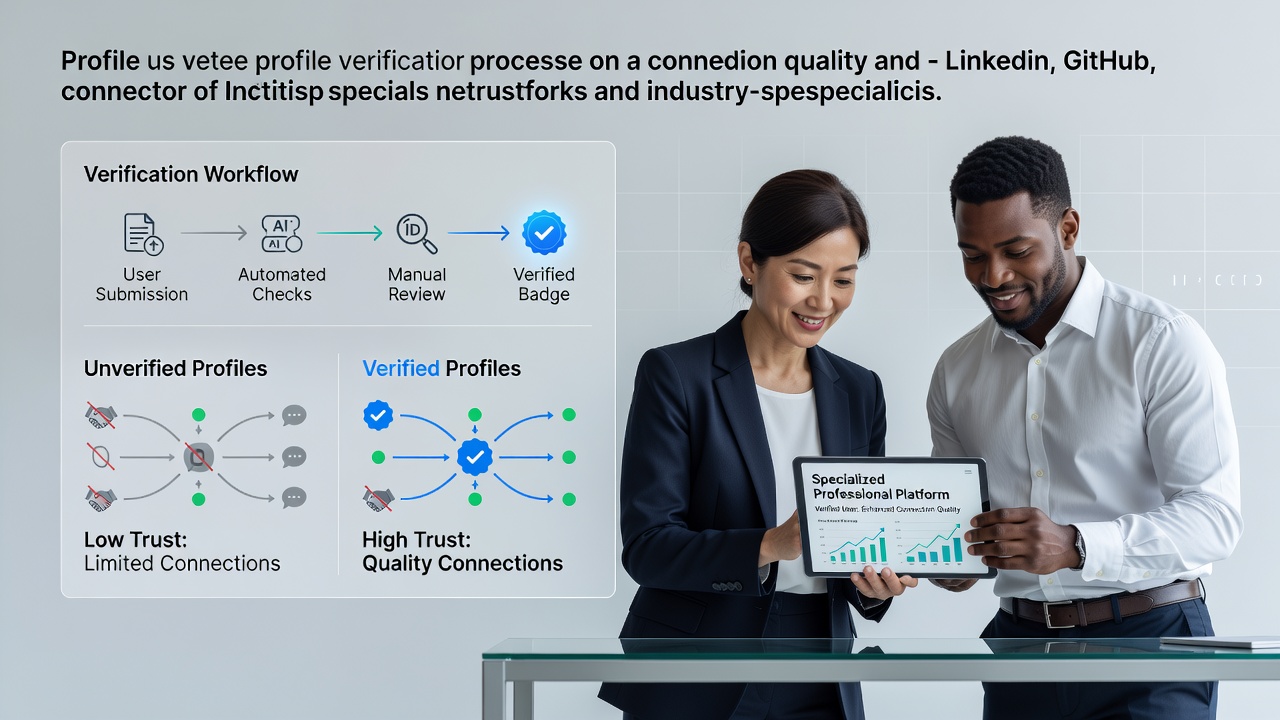
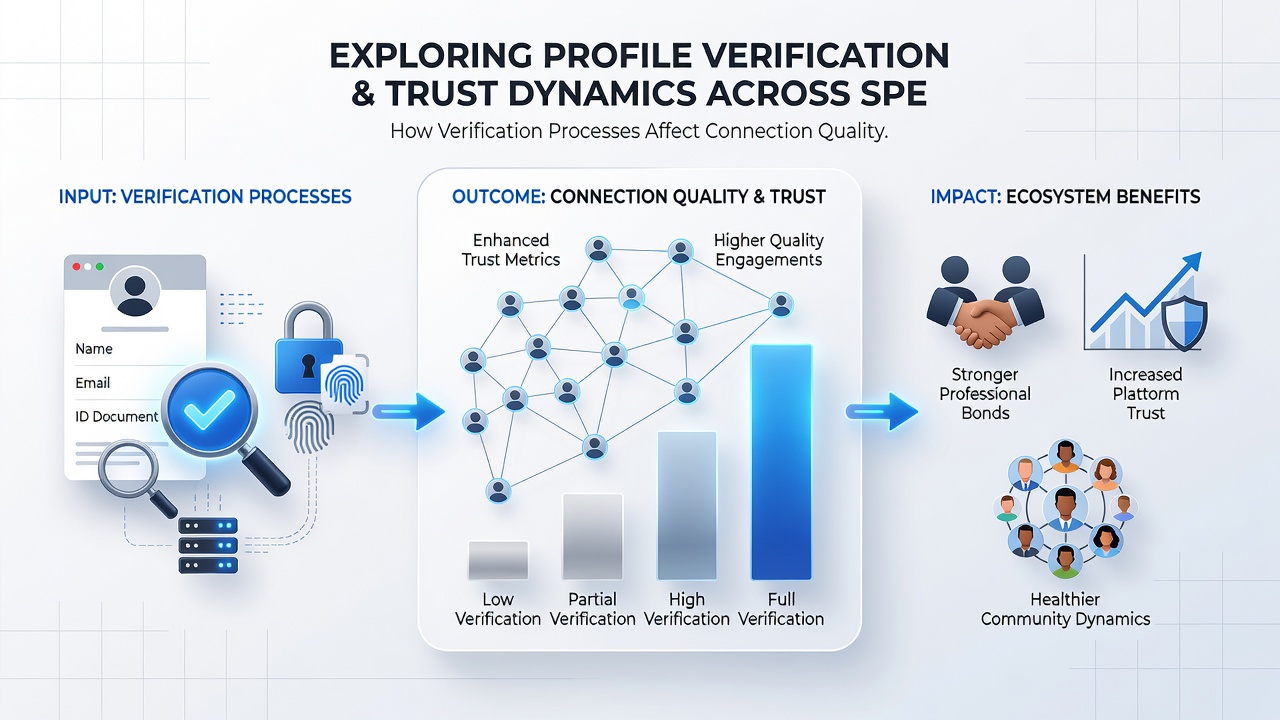
Profile verification processes on specialized professional platforms operate through layered checks that confirm identity, credentials, and employment history before users gain full access to connection features, and these steps directly shape how participants form relationships in fields such as healthcare, legal services, engineering, and academic research. Platforms typically require government-issued identification, educational transcripts, or employer endorsements, which filter out unverified accounts and reduce the volume of low-quality outreach that otherwise clutters inboxes and networking feeds.
Mechanics of Verification Across Niche Networks
Specialized platforms implement verification in stages that combine automated document scanning with manual review by compliance teams, while some integrate third-party services to cross-check professional licenses against public registries maintained by regulatory bodies. This approach creates a baseline of authenticity that users encounter immediately upon signup, and it limits the spread of fabricated profiles that could otherwise undermine group discussions or project collaborations. Data from industry reports indicate that platforms enforcing multi-step verification see measurable declines in spam reports within the first quarter after rollout, because verified users tend to engage in more targeted exchanges rather than mass messaging.
Observers note that verification levels often appear as visible badges next to names and titles, which influences how quickly new connections form in real time. In healthcare-focused networks, for instance, physicians with confirmed board certifications receive priority placement in search results, leading to higher response rates from colleagues seeking referrals or research partnerships. Similar patterns emerge in legal platforms where bar association verification correlates with increased invitation acceptance among attorneys handling cross-jurisdictional matters.
Impact on Connection Quality Metrics
Connection quality rises when verification reduces the presence of incomplete or misleading profiles, because participants can allocate more time to evaluating actual expertise instead of questioning basic legitimacy. Research conducted by academic teams at Canadian institutions shows that verified networks record longer average conversation threads and higher rates of scheduled follow-up meetings compared with unverified counterparts. These outcomes stem from the reduced cognitive load placed on users who no longer need to perform extensive background checks themselves before responding to messages.
Platforms that introduced credential verification in late 2025 reported sustained increases in active user sessions through the following year, and figures released in November 2026 highlighted a 22 percent uptick in successful project collaborations among verified cohorts. The same data sets revealed that unverified accounts continued to generate disproportionate bounce rates, prompting administrators to tighten onboarding requirements further.
Shifts in Trust Dynamics and User Behavior
Trust dynamics evolve as verification signals become standardized elements of profile presentation, encouraging participants to share more detailed information once initial skepticism fades. In engineering communities, verified members exchange technical specifications and contract opportunities at higher volumes because the verification layer signals accountability that extends beyond the platform itself. European Commission guidelines on digital identity frameworks have encouraged several platforms to align verification standards with cross-border recognition protocols, which in turn supports smoother trust transfer when professionals move between EU member states.
Those who study participation patterns find that verified users initiate fewer but more substantive connections, whereas unverified accounts cluster around low-stakes interactions that rarely progress beyond initial contact. This behavioral split appears consistently across regions, including data gathered from Australian professional associations and U.S.-based research repositories, where verified status correlates with elevated endorsement rates and recommendation reciprocity.
Platform Adjustments and Ongoing Developments
Administrators continue to refine verification thresholds in response to emerging fraud tactics, and updates scheduled for late 2026 incorporate biometric elements alongside traditional document checks. These refinements aim to maintain connection quality without creating excessive friction that could deter new specialists from joining. Industry organizations such as the International Association for Professional Networks have published comparative analyses showing that moderate verification intensity yields the strongest retention figures across multiple sectors.
Users adapt to these systems by prioritizing platforms that display clear verification criteria upfront, which reduces time spent navigating inconsistent policies. The result is a feedback loop where higher verification standards attract more serious participants, further elevating overall trust levels within each specialized community.
Conclusion
Profile verification processes on specialized professional platforms produce measurable effects on connection quality through reduced noise and clearer signals of legitimacy, while simultaneously reshaping trust dynamics by establishing shared expectations around authenticity. Continued alignment with regulatory and academic standards supports these outcomes across geographic regions, and platforms that balance rigor with accessibility sustain stronger participation patterns over time.